Engineering Projects
Mechanical Engineering & Design Innovation
Small-Scale Automated Anodizing System
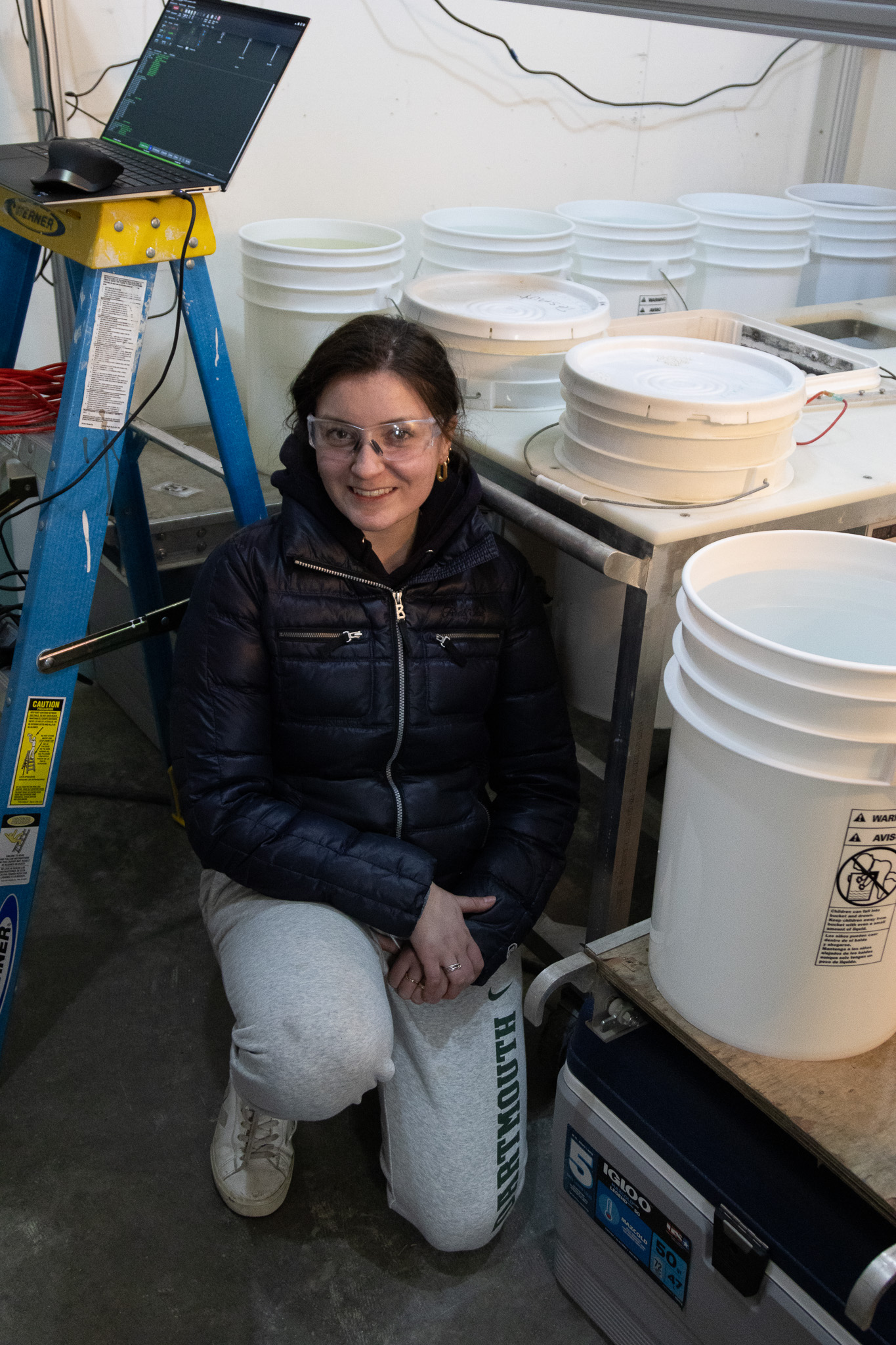
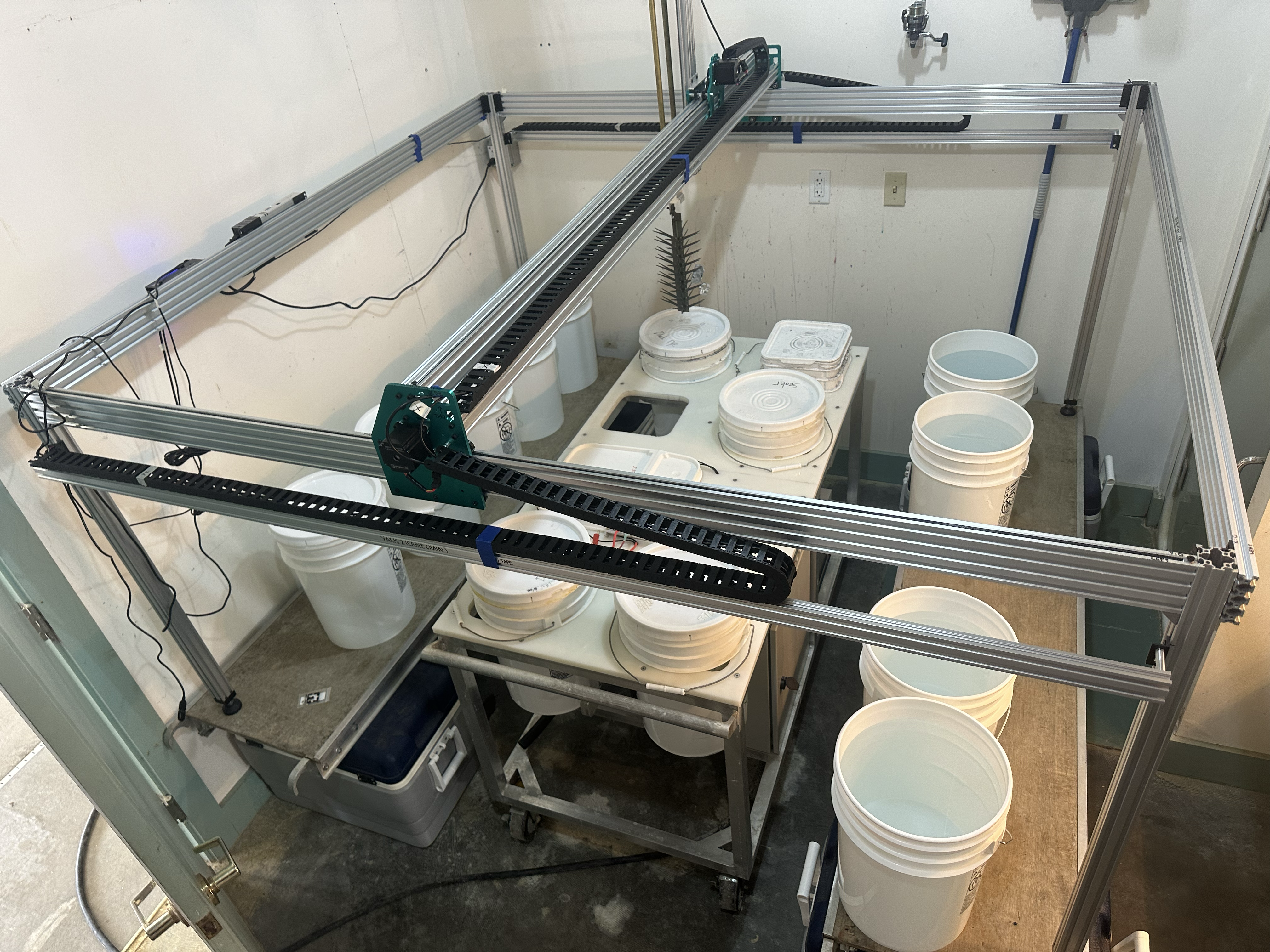
Small Scale Anodizing Gantry setup at Lost Nation with chemical baths and rinse buckets
Anodization enhances aluminum durability and enables custom coloring, but small-scale manufacturers face a critical accessibility gap. Outsourcing to large warehouses requires costly batch minimums and extended lead times, while manual anodizing exposes workers to hazardous chemicals and consumes valuable production time. As mechanical lead, I designed and built a 3-axis gantry system that automates the anodizing process in-house, enabling manufacturers to safely process up to 6 kg of parts while focusing on higher-value tasks.
My Contributions:
- Mechanical design - Developed full CAD model in SolidWorks with load calculations for 6 kg aluminum rack capacity plus power supply integration
- Structural engineering - Selected T-slotted framing system and designed custom gantry plates and Z-axis assembly to handle chemical bath immersion cycles
- Fabrication and iteration - Built prototype, identified structural weaknesses through testing, and implemented design improvements
- Integration - Collaborated with sponsor's temperature control system team to ensure seamless bath regulation
- Documentation - Authored comprehensive 20+ page assembly manual with detailed instructions, reducing sponsor setup time and eliminating need for manual chemical handling
Technical Implementation:
The system uses custom GCODE programming via the Anodizing Program calibration software, controlled through Open Builds driving software. The mechanical structure combines readily available components with custom-designed elements to create an accessible, cost-effective solution for small manufacturers.
Impact:
Eliminated hazardous manual labor while significantly reducing costs and lead times compared to outsourcing.
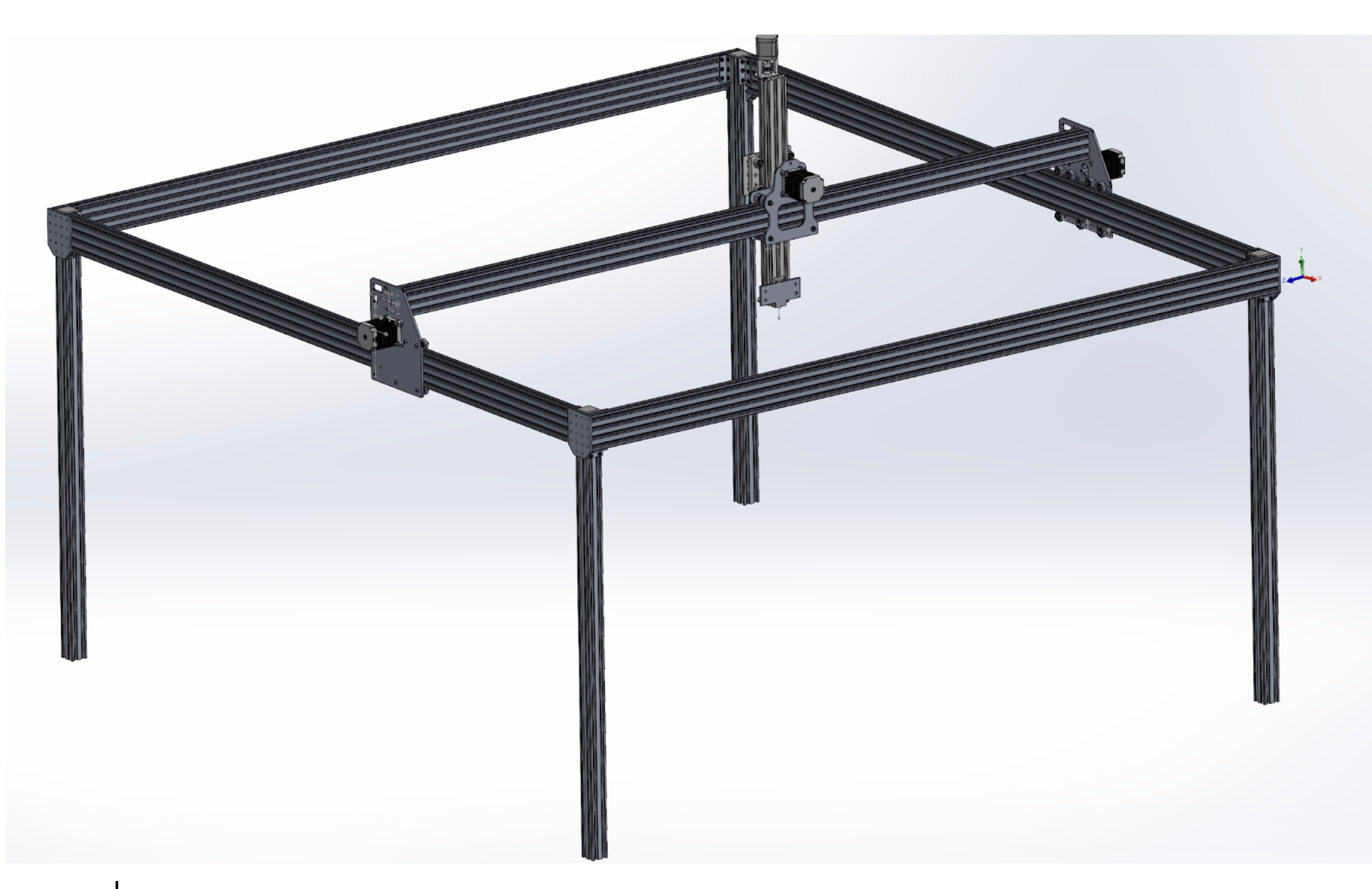
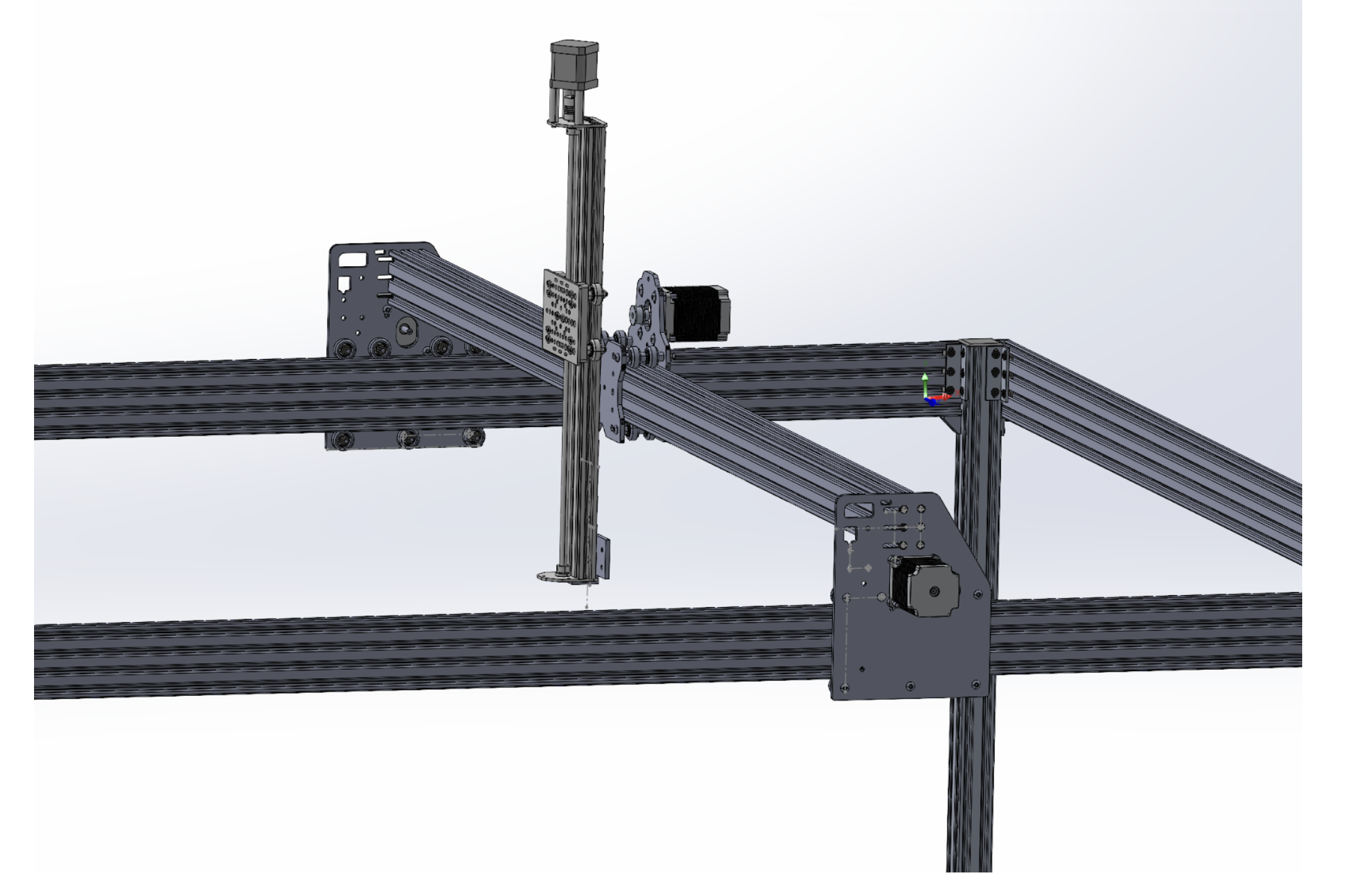
SolidWorks: CAD assembly photos
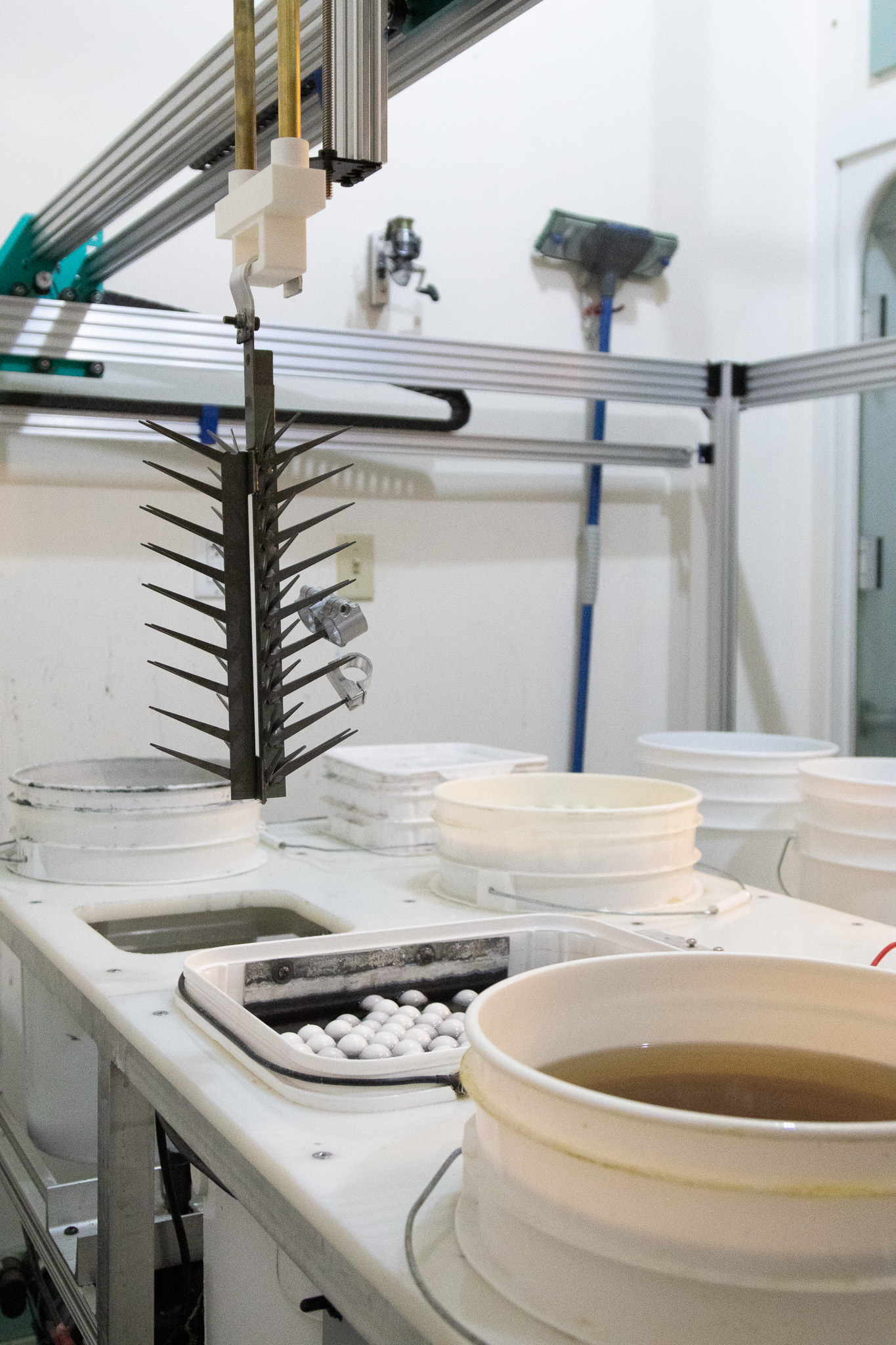
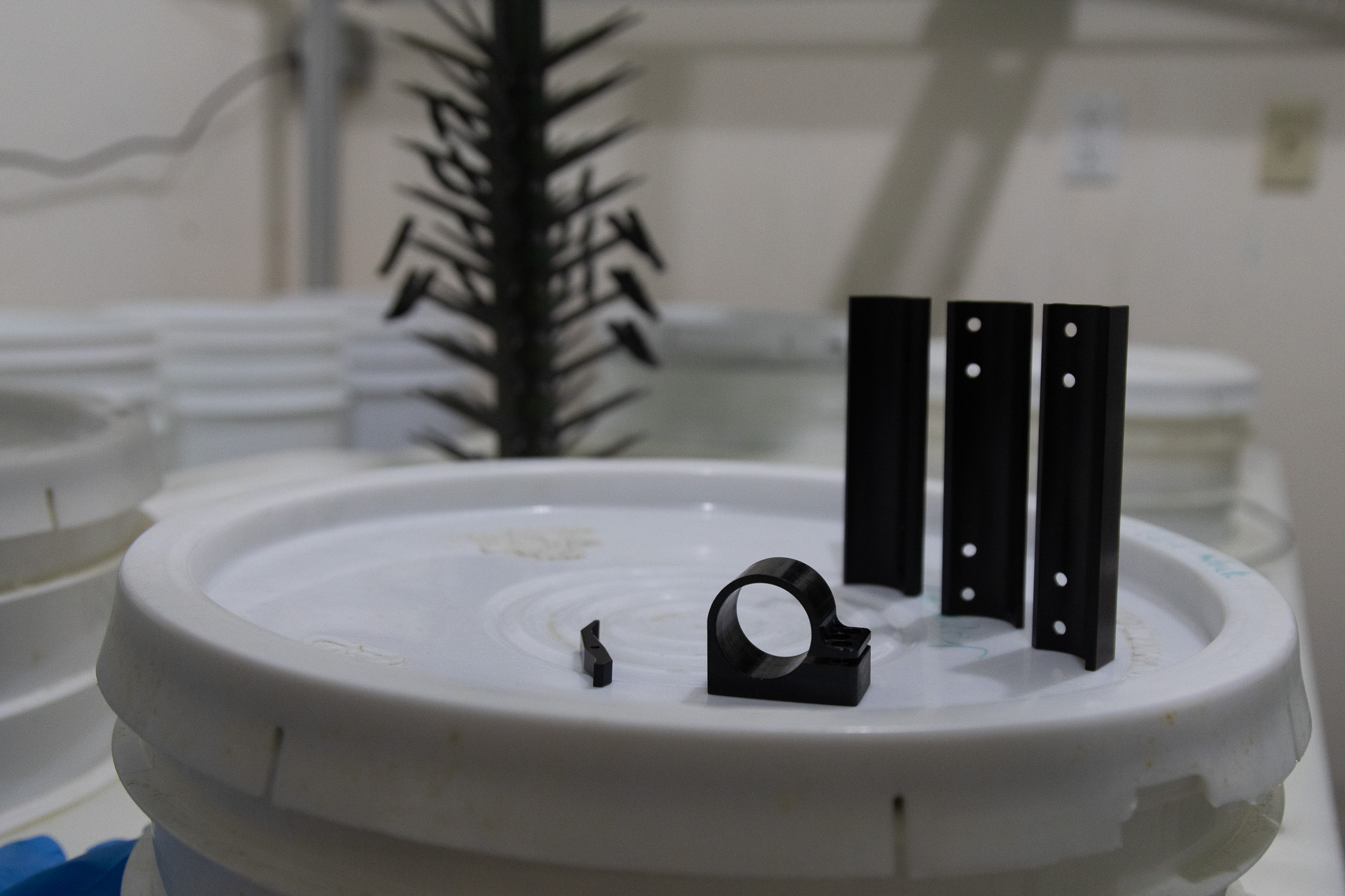
Rack moving to Anodizing Stage (left) and fully Anodized Parts at end of 2.5 hour cycle (right)
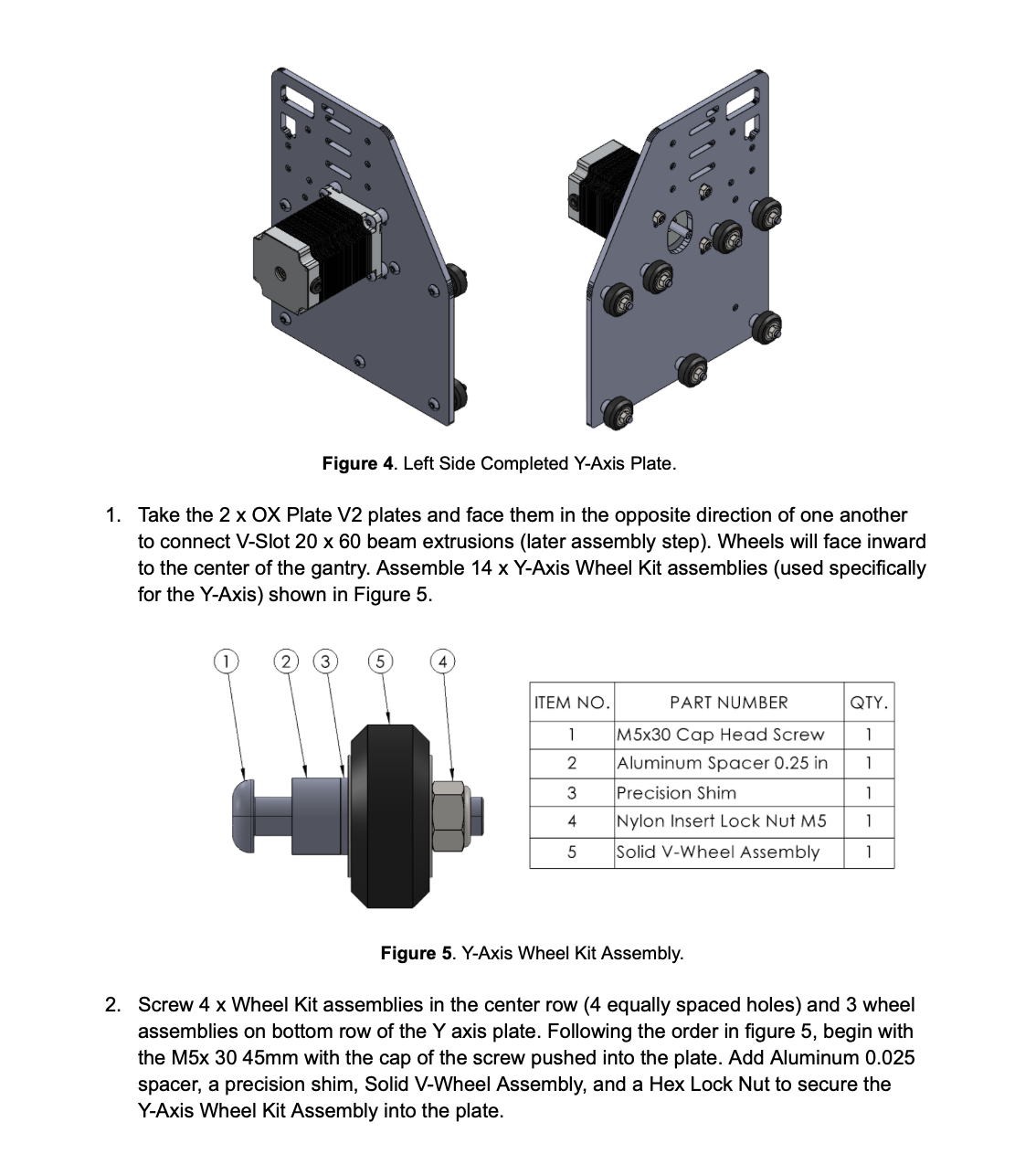
Page Extracted from Assembly Manual
Autonomous Terrain Rover - "The Designated Driver"
Designed and fabricated a remote-controlled rover to navigate challenging terrain, collect objects, and climb a vertical cliff within strict size and time constraints. Our team completed the full mission course in 5 minutes 32 seconds, successfully retrieving all game objects and scaling the ridge.
My Contributions:
- Gripper design & fabrication - Co-developed parallel linkage gripper mechanism using 4-bar linkage to maintain parallel contact pads; 3D printed components and assembled servo-driven system capable of grasping cubes, batteries, and irregular objects
- Gearbox assembly - Fabricated and assembled worm-spur two-stage gearbox housing from laser-cut plywood with precise gear tolerances; designed modular bolt-together construction for rapid iteration
- Mechanical fabrication - Operated 3D printers, laser cutters, and machine shop tools to produce custom wheels, chassis components, and gripper parts; iterated designs based on testing feedback
- Winch mechanism - Assembled dual-servo winch system and deployed mechanism for autonomous cliff climbing
Technical Implementation:
The rover featured a compact box chassis (16"×16" footprint, 7.8 lb) with custom-designed spiral flex wheels for terrain adaptability, a worm-spur gearbox delivering high torque at low speed (~1 ft/s), and an extending parallel gripper arm with FEA-verified deflection under load. Chassis construction used finger-jointed plywood with reinforced cross-members to handle varying gripper loads.
Key Challenge Solved:
Initial wheel designs with TPU tires deflected excessively (>3mm), compromising rover stability. Redesigned wheels with spiral radiating walls in rigid PLA, eliminating support structures during 3D printing and improving print time while maintaining terrain grip.
Competition Performance:
Successfully navigated boulder fields, collected all objects, and completed 30-second cliff climb. Rover maintained structural integrity despite front-heavy landing from descent jump.
Future Endeavors:
Became a Teaching Assistant for the class (Fall 2025), mentoring 8 robotics design teams through concept, CAD, and fabrication. Led SolidWorks sessions, conducted design reviews, and guided mechanical analysis & team collaboration while managing all logistics in close collaboration with course faculty.
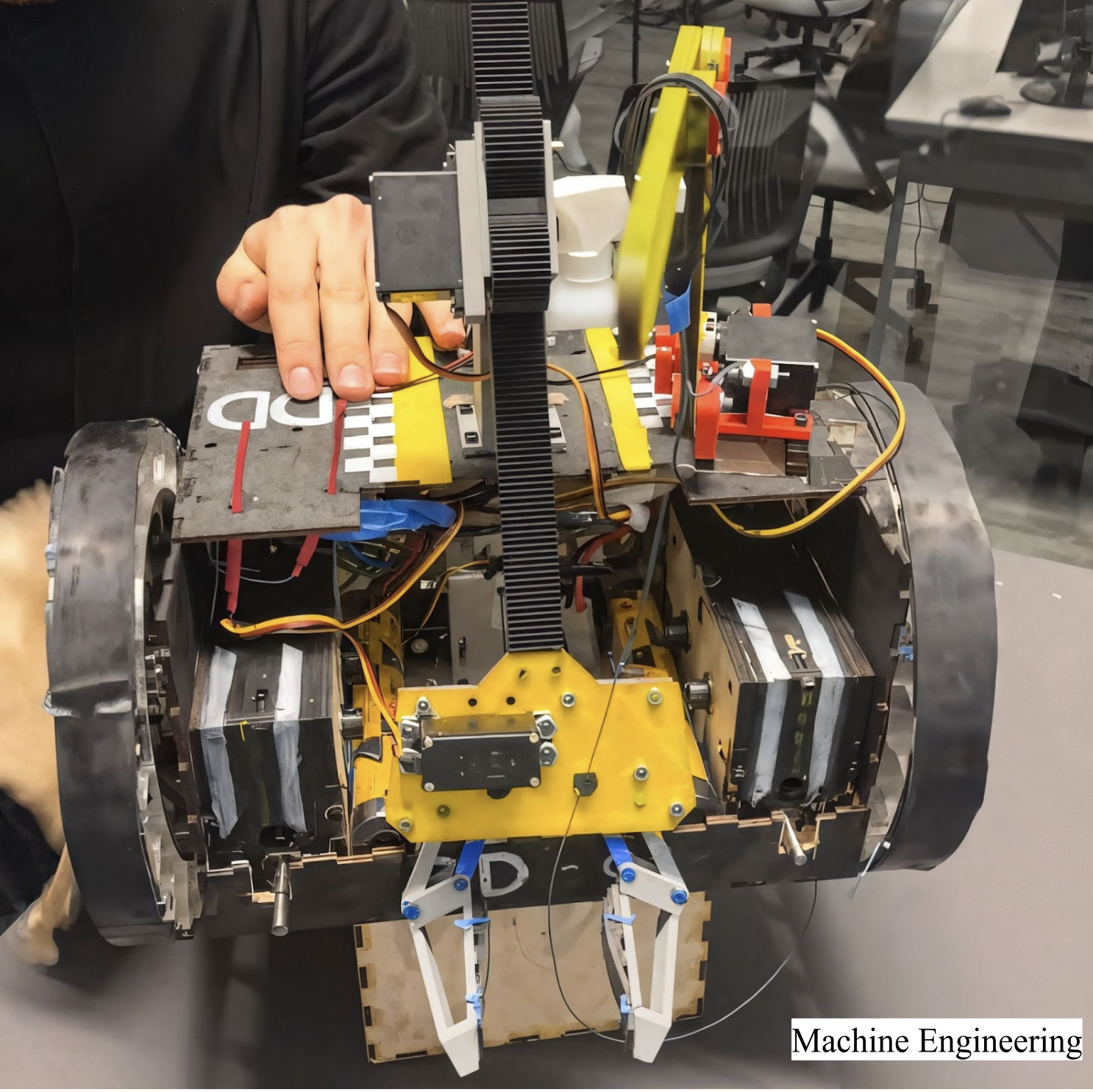
Full rover assembly photo
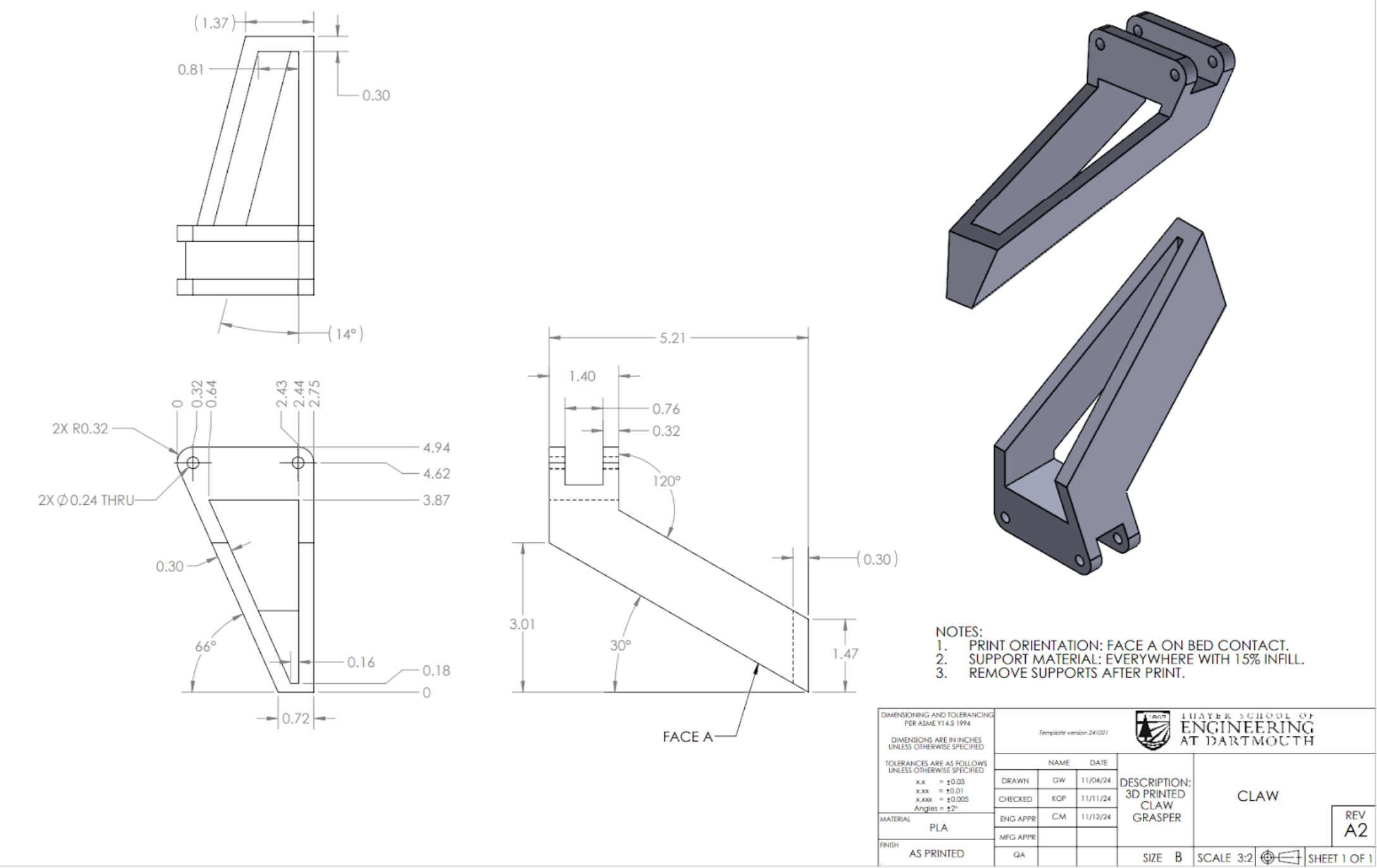
Engineering Drawing
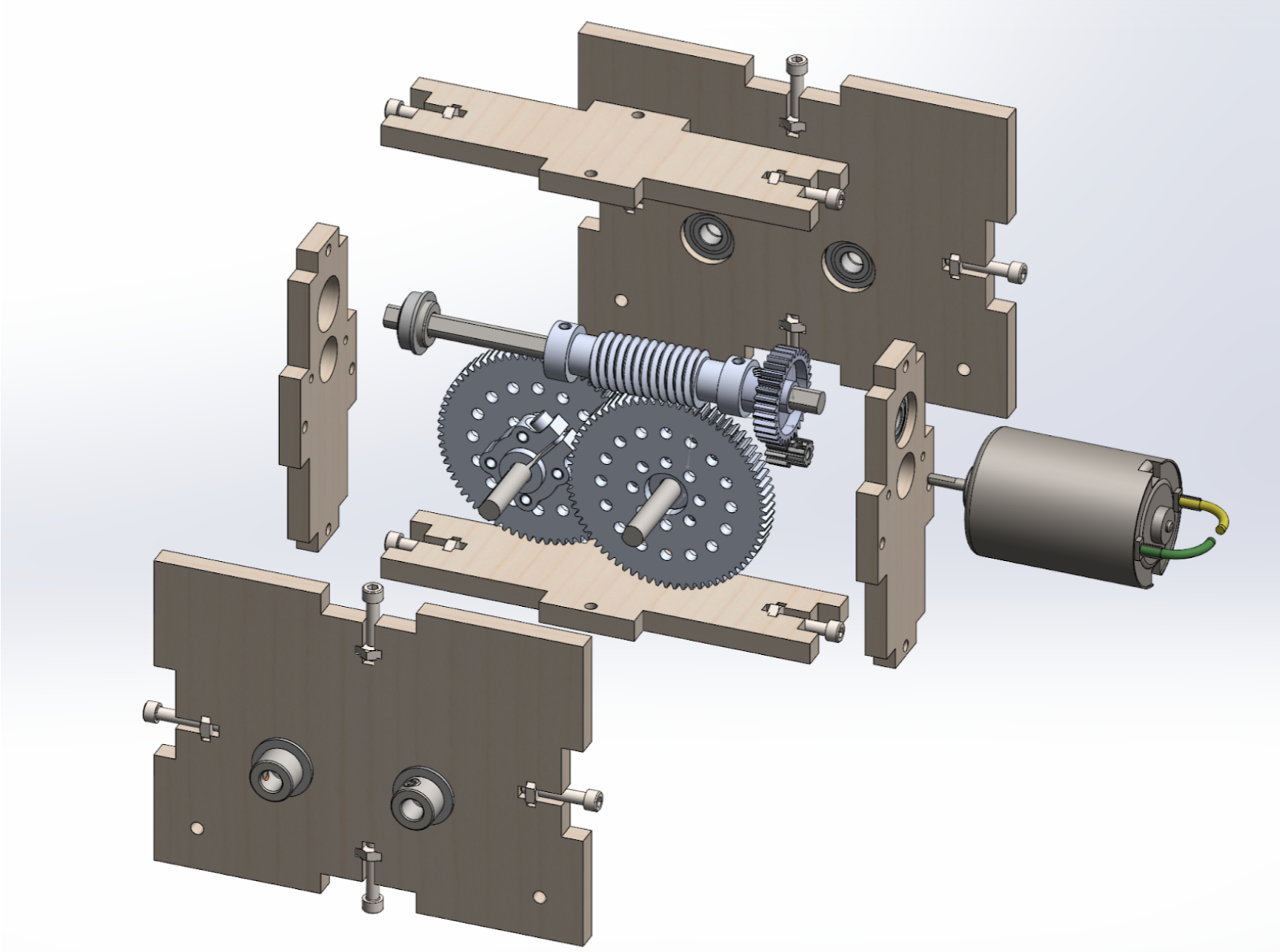
Gear Box Exploded View
Vertical Axis Wind Turbine for Emergency Power
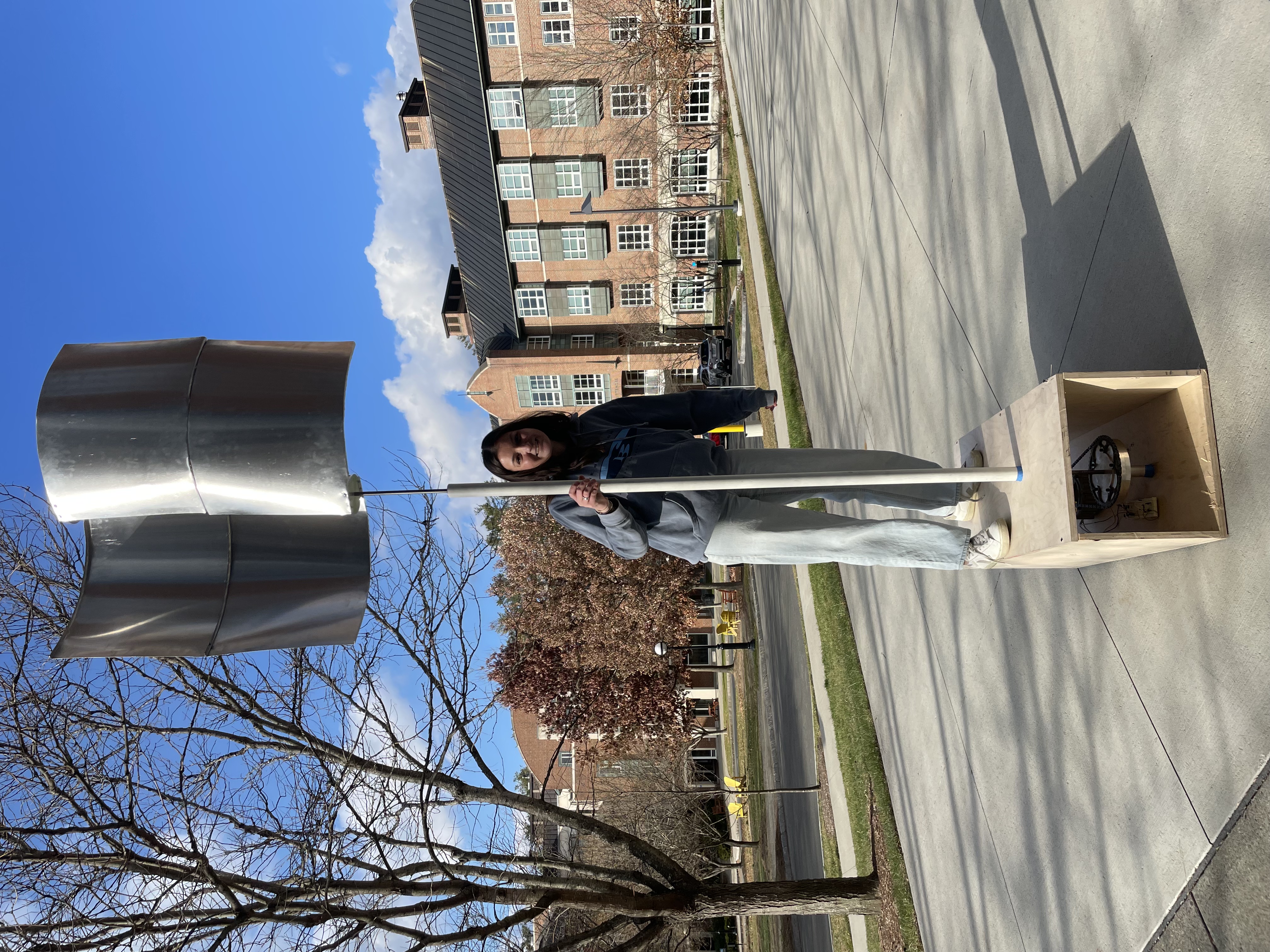
Designed and fabricated a low-cost Vertical Axis Wind Turbine (VAWT) as an emergency power source for rural communities, optimized for New England's variable wind conditions. The turbine features a Savonius rotor design selected for its self-starting capability and effectiveness in low-speed, turbulent wind environments typical of ground-level installations.
My Contributions:
- CNC machining & fabrication - Co-machined custom aluminum hubs on CNC mill and lathe; welded two large aluminum sheet rotors to hubs on 3-meter steel shaft
- Drivetrain design - Designed and fabricated custom gear reduction system connecting rotor shaft to permanent magnet generator (PMG) for USB device charging
- CAD modeling - Developed full assembly in SolidWorks including rotor geometry, hub interfaces, shaft mounting, and gear system
- Performance optimization - Analyzed local meteorological data from Dartmouth weather stations to optimize rotor sizing and gear ratios for regional wind patterns (average speeds 8-12 mph with high turbulence)
Design Philosophy:
Emphasized accessibility and repairability through salvaged and off-the-shelf components. Generator, bearings, and structural steel were sourced from surplus equipment to reduce costs while maintaining durability. Simple bolt-together construction enables field repairs without specialized tools.
Technical Specifications:
- 3-meter vertical shaft with dual aluminum blade Savonius rotor
- Custom gear reduction system for optimal generator RPM at low wind speeds
- PMG output: 5V USB for direct device charging
- Materials: Aluminum sheet (rotor blades), steel shaft, salvaged generator and bearings
Skills Developed:
CNC mill operation, lathe machining, MIG welding aluminum to steel, drivetrain design, renewable energy system integration, sustainable material sourcing
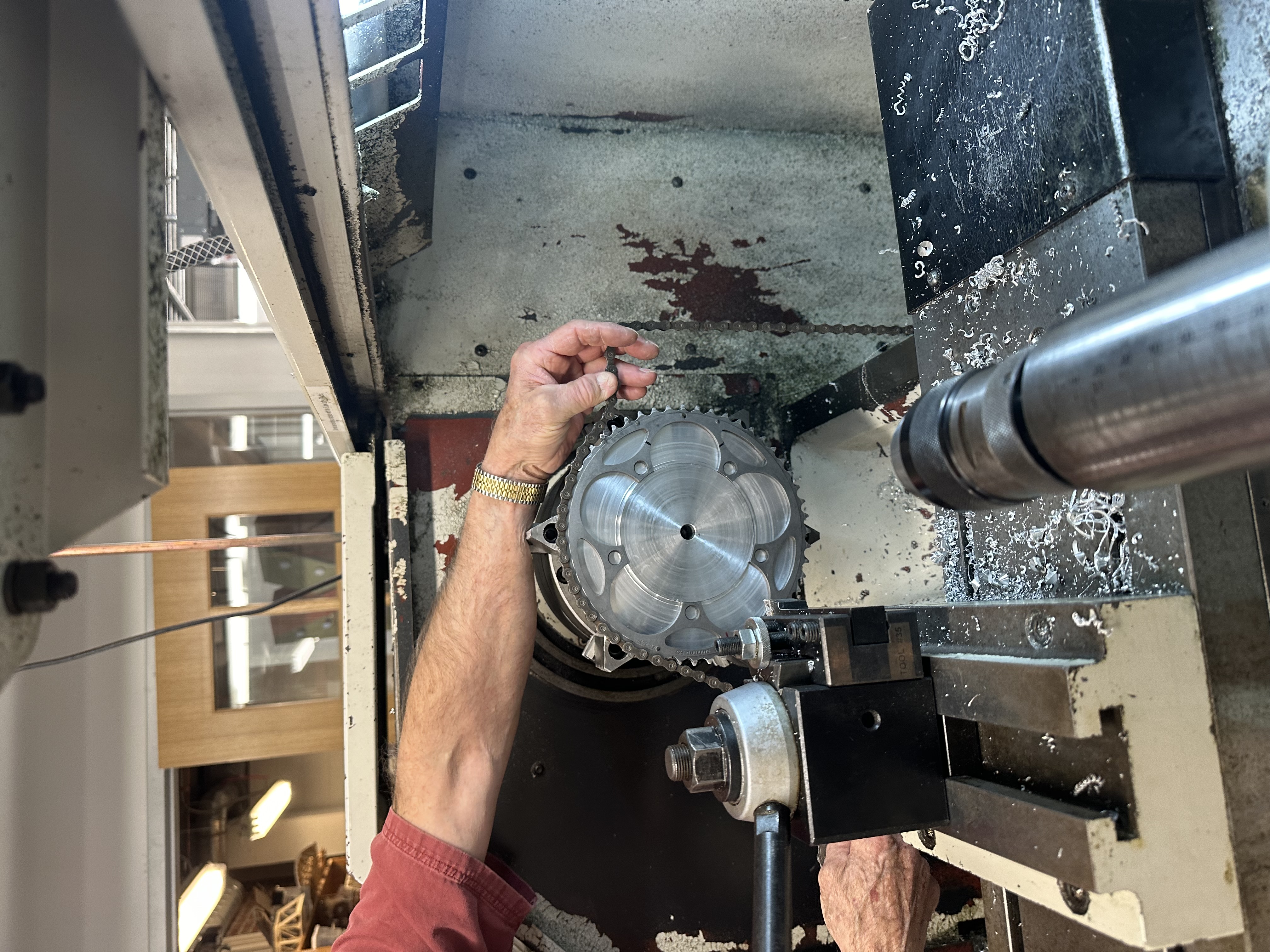
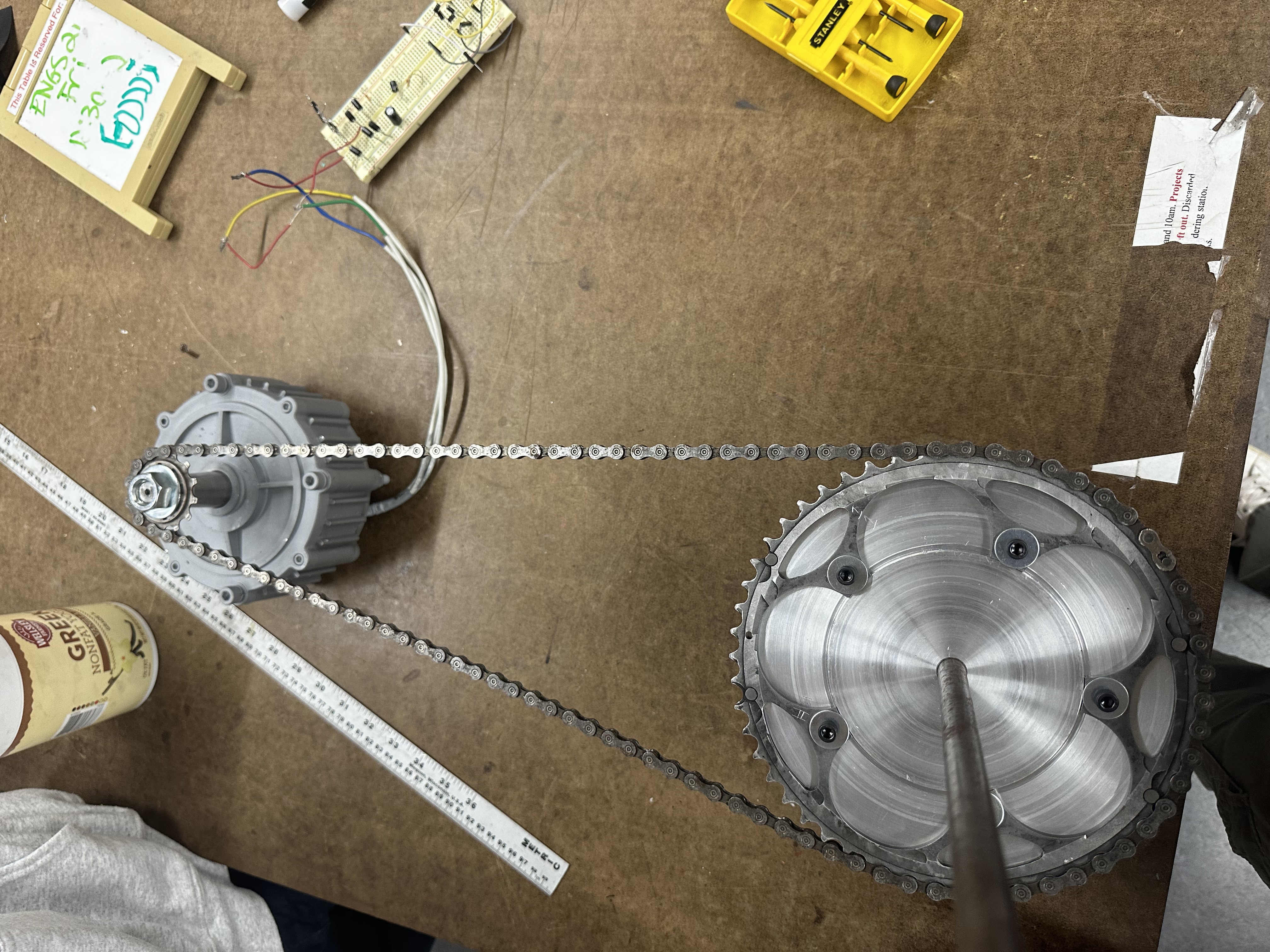
Wind Turbine Assembly Photos
Anonymous STD Test Dispenser
Designed and prototyped an automated vending-style dispenser to improve anonymous access to at-home STD testing kits on college campuses, addressing barriers of stigma and inconvenient clinic hours.
My Contributions:
- Mechanical design - Developed gravity-fed dispensing mechanism in SolidWorks with secure payment-activated release; designed compact enclosure for discreet campus placement
- Prototyping - 3D printed functional prototype demonstrating dispensing mechanism and user interface
- Financial management - Managed project budget as team treasurer; conducted cost analysis of bulk test kits versus traditional campus health services
- Technical documentation - Co-authored reports covering design specifications, economic feasibility, and implementation strategy
Key Features:
Anonymous payment system, tamper-resistant enclosure, 24/7 access, multi-kit capacity (HIV, chlamydia, gonorrhea).
Interdisciplinary Approach:
Integrated mechanical engineering, public health considerations, economics, and user privacy concerns to create an accessible solution addressing low testing rates among college students.
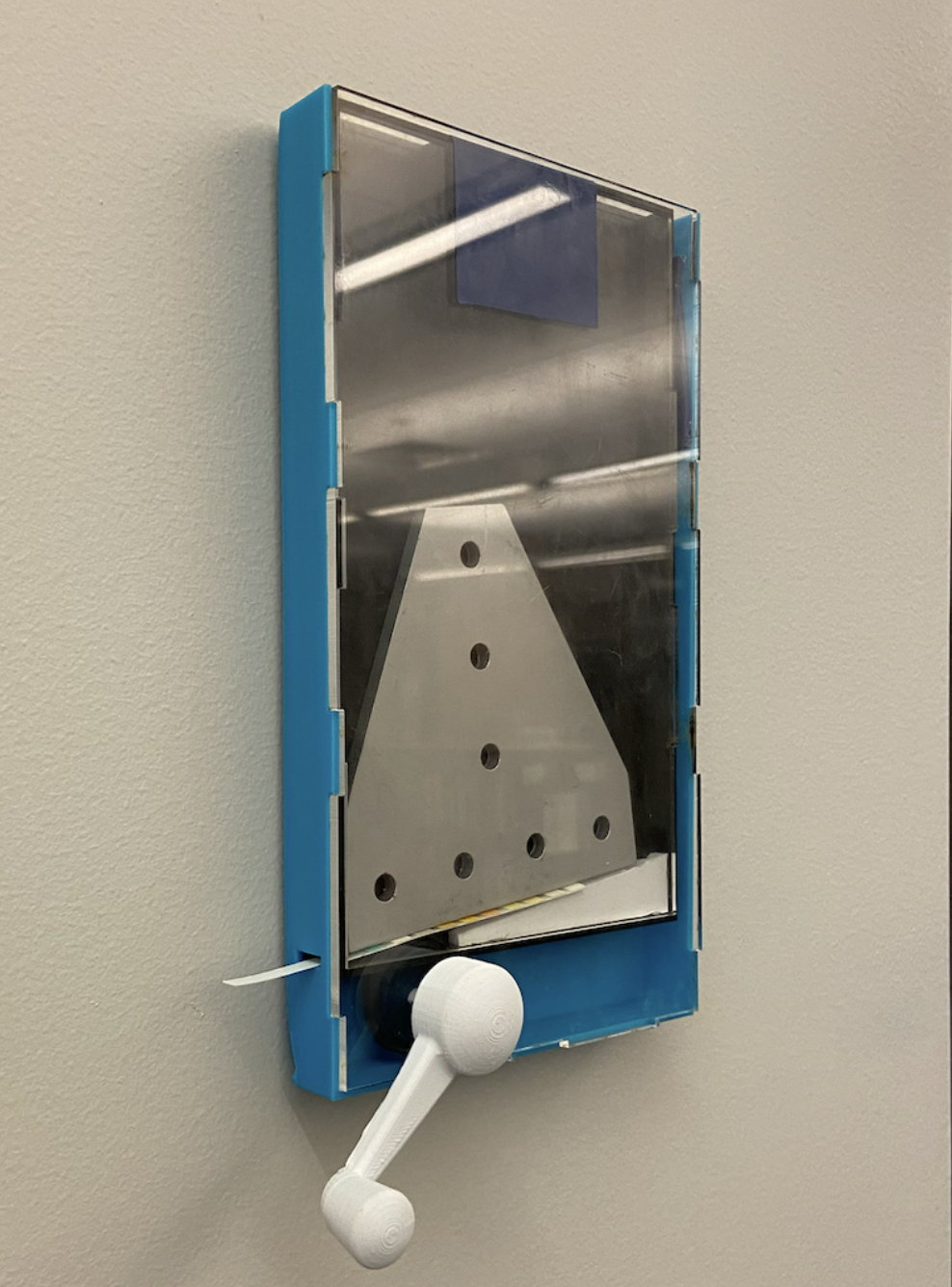
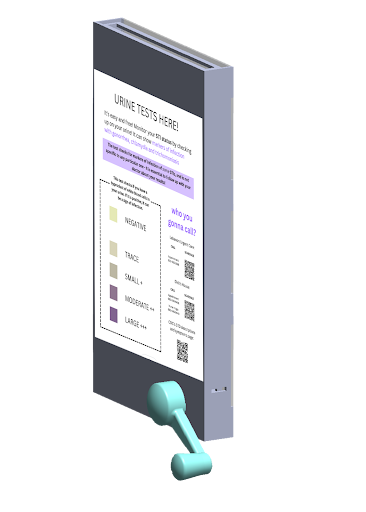
Full functioning STD dispenser and CAD Prototype
Case Studies & Research Projects
Diamond Lattice Structure Optimization for Piezoelectric Energy Harvesting
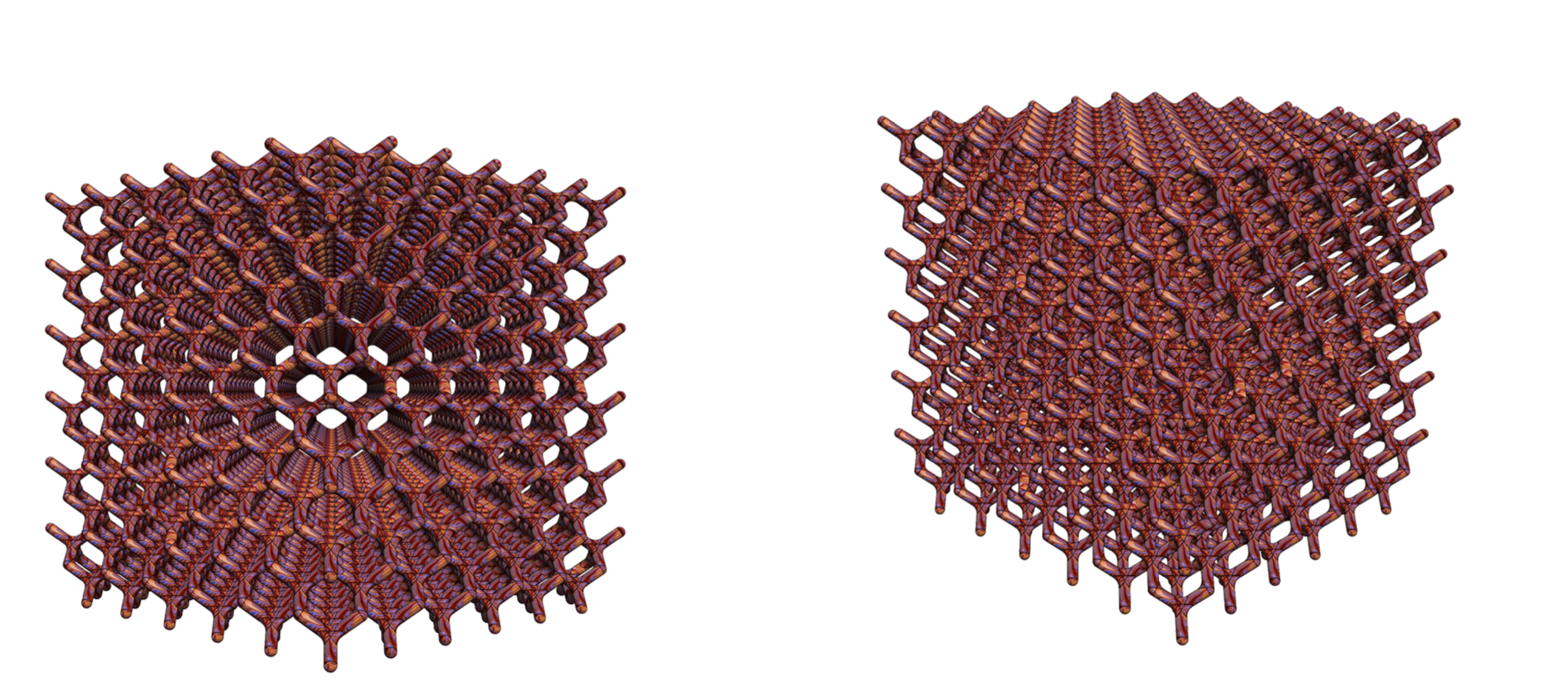
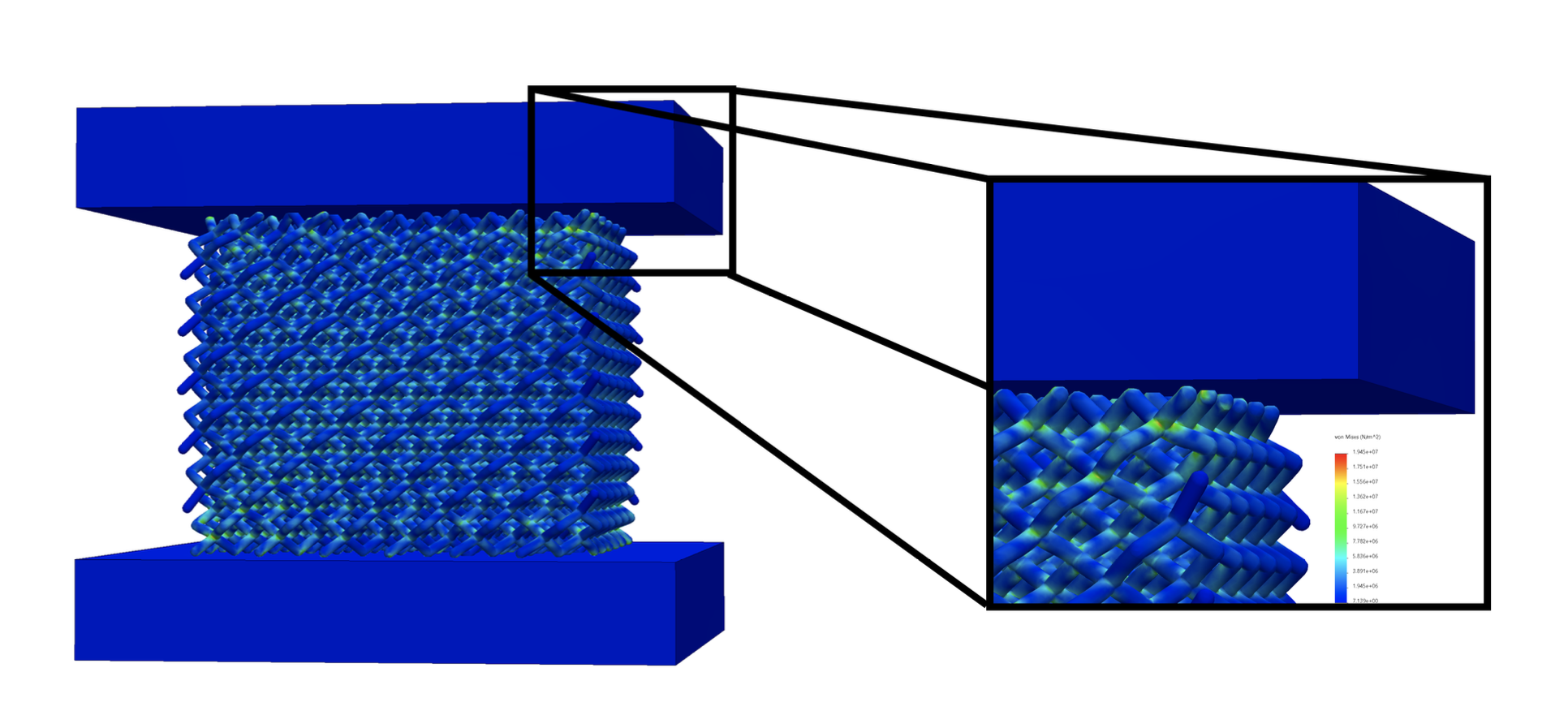
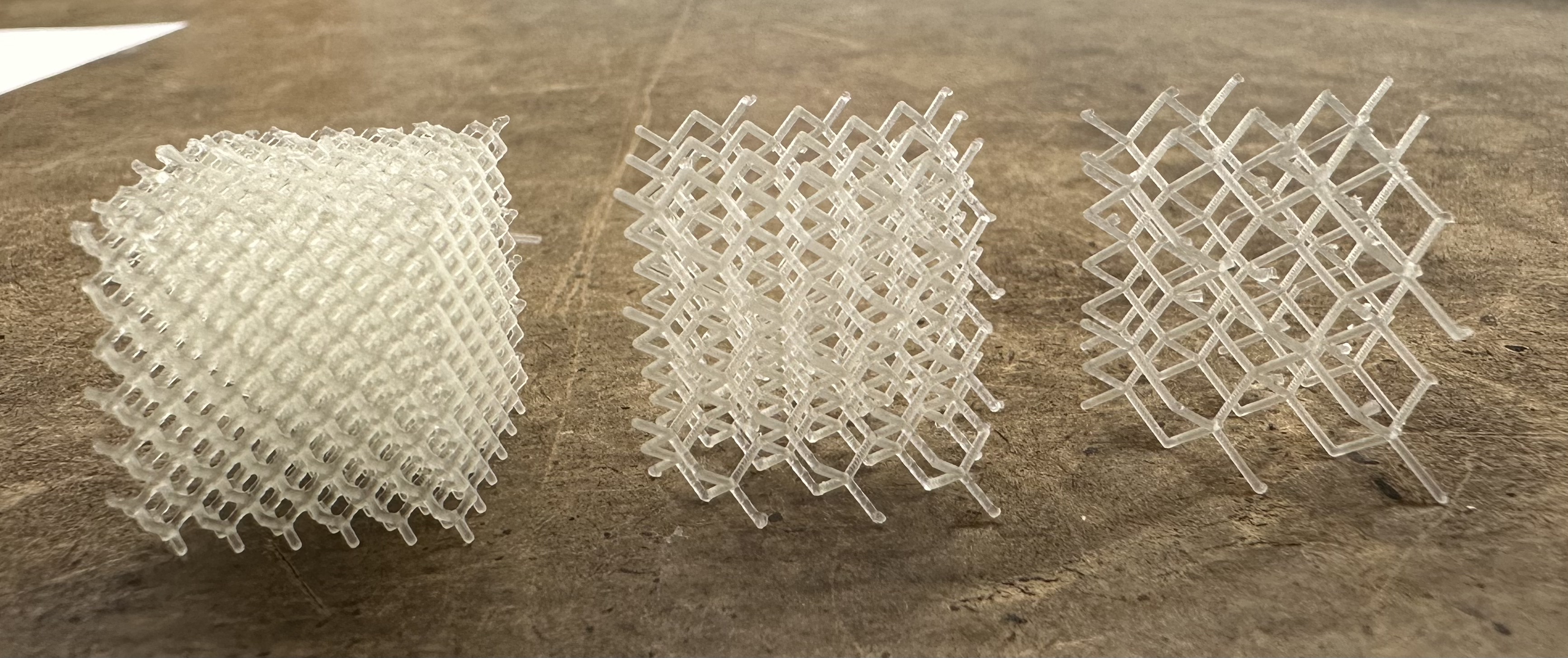
Investigated geometric optimization of 3D-printed diamond lattice structures to maximize energy absorption for piezoelectric applications. Generated 20 parametric lattice configurations in SolidWorks varying unit cell size (2×2×2 through 6×6×6) and fillet radius (0-0.5mm), then performed nonlinear FEA simulations under compressive loading to extract stress-strain curves, elastic modulus, and energy absorption data.
Key Finding:
Fillet effectiveness is scale-dependent—2×2×2 lattices showed 43% stress reduction with large fillets while 6×6×6 configurations showed minimal effect. Counterintuitively, 4×4×4 lattices with small fillets increased stress by 11%, revealing that optimal fillet radius must scale proportionally with unit cell size rather than using constant values.
Skills:
SolidWorks parametric modeling, FEA simulation, mesh optimization, computational analysis, data visualization
Additive Manufacturing of Tennis Racket Grommets: Solving Supply Chain Disruption for Discontinued Models
Evaluated additive manufacturing as an economically viable replacement for injection-molded tennis racket grommets on discontinued models, where demand (100-500 units annually) cannot justify $8,000-$25,000 tooling costs. Analyzed material property requirements for grommets subjected to extreme loading conditions—40-70 lbs static string tension combined with dynamic impact loads up to 170 kg—and identified critical performance gaps in standard AM materials that cause premature cracking.
Conducted manufacturing process comparison and cost-benefit analysis across injection molding versus AM technologies (Multi Jet Fusion, Selective Laser Sintering). Determined PA11 nylon as optimal material for achieving ±0.2mm dimensional tolerance required for racket/string fitment while targeting 20+ hours play time durability. Established break-even analysis framework showing AM economics heavily favor small-batch production across multiple racket models, creating viable market opportunity where injection molding is cost-prohibitive but maintaining price competitiveness against $75+ old-stock grommets.
Skills:
Manufacturing economics, cost-benefit analysis, material selection, process comparison, design for additive manufacturing (DfAM), market analysis
Hydrogen Fuel Cell Bus Fleet Optimization: Multi-Objective Modeling for AC Transit
Developed multi-objective optimization model for AC Transit's transition from diesel-dominated fleet (~630 buses, currently 9% zero-emission) to 100% hydrogen fuel cell buses by 2040, meeting California's Innovative Clean Transit (ICT) mandate. Analyzed tradeoffs between infrastructure costs, greenhouse gas emissions reduction, and operational reliability for fleet conversion targeting zero tailpipe emissions while maintaining service performance.
Modeled hydrogen fuel cell advantages over current fleet composition—350-mile range versus battery-electric's 150 miles, 10-15 minute refueling versus hours-long charging, and elimination of 100 metric tons CO₂/year/bus from diesel operations. Optimized infrastructure deployment strategy balancing hydrogen refueling station placement, clean hydrogen sourcing pathways (electrolysis vs. steam methane reforming with carbon capture), and capital expenditure timing. Created framework prioritizing local air quality improvements in disadvantaged communities while ensuring operational competitiveness through fast refueling and extended range capabilities critical for transit schedules.
Skills:
Multi-objective optimization, infrastructure planning, emissions modeling, cost-benefit analysis, transportation systems analysis, sustainability assessment
Three-Point Bending Fracture Testing of Wood Samples
Characterized fracture toughness (K_IC) and fracture energy (G_F) of wood samples through controlled three-point bending tests, investigating how grain orientation affects crack propagation in this orthotropic material. Conducted experimental testing on specimens with perpendicular and parallel grain orientations, analyzing load-displacement behavior and failure modes.
Applied linear elastic fracture mechanics (LEFM) theory to calculate fracture properties and documented how wood's anisotropic structure creates preferential fracture planes along grain boundaries—critical understanding for designing safe timber structural components.
Skills:
Experimental testing, fracture mechanics, materials characterization, data analysis, technical reporting
GE9X Heat Exchanger Additive Manufacturing Case Study
Analyzed General Electric's design and manufacturing transformation of the GE9X aircraft engine heat exchanger—the world's largest commercial jet engine component—from 163 traditionally-manufactured parts to a single 3D-printed aluminum structure. Investigated how Direct Metal Laser Melting (DMLM) enabled 40% weight reduction (2.9 kg saved) and 10% fuel efficiency improvement while consolidating weeks of welding/brazing operations into one 45-60 hour print cycle.
Evaluated alternative additive manufacturing processes, comparing DMLM's laser powder bed fusion against Electron Beam Melting (EBM). Determined DMLM was optimal for aluminum F357 processing due to superior surface finish (Ra 5-15 µm vs. 25-35 µm), higher resolution (100-200 µm features), and established aluminum processing parameters, despite EBM's faster build speeds. Analyzed how part consolidation eliminated 162 potential joint failure points—critical for components operating at -65°F to 1,200°F under high cyclic loading over 20+ year service life.
Skills:
Manufacturing process selection, materials analysis, cost-benefit analysis, design for additive manufacturing (DfAM), technical research
Delta Flight Delay Analysis: Statistical Modeling of Connection Probability
Applied Monte Carlo simulation, hypothesis testing, and confidence interval analysis to evaluate the probability of successfully completing a multi-leg flight itinerary with tight connections during February winter travel. Analyzed historical delay data from Eagle County Regional Airport (EGE) and Atlanta Hartsfield-Jackson (ATL) to quantify travel risks.
Ran 10,000 Monte Carlo simulations modeling connection success between DL 1265 (EGE→ATL) and DL 300 (ATL→BOS) with an 83-minute connection window. Results showed 44% probability of making the connection and only 15-20% probability of catching the 8:50 PM Dartmouth Coach (23-minute buffer). Statistical analysis revealed DL 1265 averaged 54.6-minute departure delays (σ = 64.3 min) while maintaining reliable arrival times (μ = 3.3 min delay), whereas DL 300 exhibited high variability (departure: μ = 51.5 min, σ = 145.6 min). Two-sample t-test comparing five years of February data found no significant difference in delay percentages between EGE (11.45%) and ATL (10.86%), p = 0.69.
Skills:
MATLAB programming, Monte Carlo simulation, hypothesis testing, confidence intervals, statistical analysis, data visualization
Calculating the Deuterium-Hydrogen Mass Ratio Using Spectroscopy
Determined the deuterium-hydrogen mass ratio through precise spectroscopic analysis of Balmer series emission lines. Used Czerny-Turner spectrometer configuration with 1.25m focal length to measure wavelength differences between hydrogen and deuterium across four visible spectral transitions (n=3,4,5,6 → n=2), achieving experimental mass ratio of 1.99 ± 0.4—within one standard deviation of the accepted value.
Calibrated spectrometer using mercury's well-defined peaks (3131.55 Å and 3131.84 Å) to verify resolution specifications, measuring FWHM of 0.04 Å versus claimed 0.06 Å. Collected wavelength-intensity data across all four Balmer transitions, applied Lorentzian function overlays to identify peak centroids, and used weighted averaging to combine independent measurements. Calculated centroid differences (Δλ_air) between deuterium and hydrogen peaks, then applied Rydberg formula corrections to extract mass ratio. Understanding this ratio provides insights into nuclear binding energies, strong force interactions, and early universe nucleosynthesis.
Skills:
Experimental physics, spectroscopy, data analysis, error propagation, weighted averaging, precision measurement, optical instrumentation